Skip to content

Children’s Safety Books and Games: Helping Kids Learn Safety Through Stories and Play
How do you teach children to recognize unsafe situations without making the world feel frightening?
For many parents, that can be one of the hardest parts of raising confident, independent children. We want our kids to trust their instincts, speak up when something feels wrong, and know where to turn for help. But we also want them to enjoy being kids.
One way to begin is through stories, games, and conversations that make personal safety easier to understand.
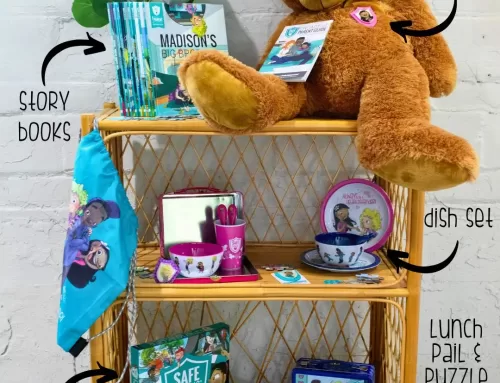
The SAFE Hearts children’s safety collection from Damsel in Defense offers families resources designed to open conversations about boundaries, recognizing uncomfortable situations, online safety, and other important topics.
At Defense in Heels, I believe personal safety education should begin long before a child needs to use it.
Why Children’s Safety Education Matters
Children encounter new people, environments, and experiences as they grow. They may spend time at school, activities, friends’ homes, sports practices, and community events.
Teaching safety is not about making children suspicious of everyone. It’s about helping them understand that their feelings matter, that they can establish boundaries, and that they can ask a trusted adult for help.
Important lessons include:
- Recognizing when a situation feels uncomfortable or confusing.
- Understanding personal boundaries and the right to say no.
- Knowing the difference between a surprise and a secret that makes them feel unsafe.
- Identifying trusted adults they can approach for help.
- Understanding age-appropriate online safety.
- Knowing that they can keep asking for help if the first adult doesn’t listen.
These lessons become more meaningful when parents revisit them over time instead of trying to cover everything in one conversation.
Meet the SAFE Hearts Children’s Storybooks
Damsel in Defense’s SAFE Hearts collection includes storybooks that use relatable situations to help families discuss difficult subjects.
Examples from the collection include:
Armor: What Do Heart Defenders Wear?
A toddler-friendly book that introduces the idea of being prepared and protected, with simple concepts designed for younger readers.
A Secret Gift for Grace
A story that opens a conversation about grooming, inappropriate secrets, and situations in which someone may try to gain a child’s trust for the wrong reasons.
Shielded Eyes, Shielded Hearts
A resource for discussing online safety and inappropriate digital content with children.
Damon’s Dilemma
A story involving a child being pressured into an unsafe situation involving a firearm, providing an opportunity to discuss firearm safety and the importance of adult supervision.
Other stories address subjects such as boundaries, safe adults, uncomfortable interactions, and seeking help.
Availability and titles may change, so check the shop for the current collection.
Turn Story Time Into a Safety Conversation
Reading together creates a natural opportunity for children to ask questions. You don’t need to turn every story into a serious lecture.
Instead, try asking:
- What would you do if you were in that situation?
- How do you think that character felt?
- Who could the character ask for help?
- What could the character say if something felt wrong?
- Can you think of another safe choice?
Listen to your child’s answers without shaming or criticizing them for being unsure.
For younger children, keep the conversation simple. Older children may be ready for more detailed discussions about peer pressure, social media, personal boundaries, and situations involving unfamiliar adults.
Most importantly, reinforce that children are not responsible for preventing another person’s harmful behavior. Adults have a responsibility to protect them, listen to them, and take their concerns seriously.
Make Learning Interactive With Children’s Safety Games
Games can provide another way to practice safety concepts as a family.
When children participate in an activity, they have opportunities to talk, ask questions, and think through choices in a relaxed environment.
Damsel in Defense also offers SAFE Hearts family resources, including a board game designed to complement its children’s safety education collection.
You can create a simple family routine:
- Read a story together.
- Talk about one safety lesson.
- Practice a phrase a child could use to set a boundary or ask for help.
- Play a game or discuss a new scenario.
- Revisit the lesson another day.
The goal is not to teach children to handle dangerous situations alone. It is to help them recognize concerns, communicate clearly, seek trusted help, and understand that they deserve to be safe.
Safety Gifts That Give Families Something More
Looking for a meaningful gift for a child, grandchild, niece, or nephew?
Children’s safety books and games can be thoughtful options for birthdays, holidays, back-to-school season, or family safety initiatives.
They can also support conversations at home, complement a children’s self-defense class, or help parents introduce age-appropriate topics before a child encounters a challenging situation.
For parents, the value extends beyond the book itself. It is an opportunity to build an ongoing conversation in which a child feels comfortable speaking up.
Help Your Child Build Confidence Through Safety Education
At Defense in Heels, I teach practical self-defense and personal safety, including classes for children. I believe kids benefit from learning awareness, boundaries, confidence, and how to seek help in an age-appropriate way.
Books and games are a useful starting point, and they can work alongside hands-on instruction and ongoing conversations at home.
Ready to explore children’s safety books and games?
Visit my Damsel in Defense shop to explore the available resources and find options for your family.
Shop Children’s Safety Products
You can also explore Defense in Heels children’s self-defense classes to learn more about helping kids develop practical safety skills.
Train TO PROTECT. Shop TO EMPOWER.
Parents and caregivers should review materials before sharing them with children and adapt conversations to each child’s age, maturity, and needs.