Skip to content
What Every Parent Needs to Teach Their Child Before Summer Break: 7 Safety Skills That Could Save Their Life
Summer break is here. While kids are excited about sleeping in, swimming, hanging out with friends, and enjoying their freedom, parents know that summer also brings increased risks.
Children spend more time away from home, often with less supervision than during the school year. Whether they’re at the park, a friend’s house, summer camp, the mall, or simply riding their bikes around the neighborhood, there are important safety skills every child should know before school lets out.
As a self-defense instructor who has taught thousands of women and children, I’ve found that safety isn’t about creating fear. It’s about building confidence, awareness, and the ability to make smart decisions.
Here are seven safety skills that could make all the difference.
1. Know How to Trust Their Gut
Children often have strong instincts, but many are taught to ignore them to avoid hurting someone’s feelings.
Teach your child that if a person, situation, or place makes them feel uncomfortable, they have permission to leave, say no, or seek help immediately.
They don’t need a reason. They don’t need proof. If something feels wrong, it’s okay to trust that feeling.
A child who trusts their instincts is much less likely to become a target.
2. Memorize Important Information
Every child should know:
- Their full name
- Parent or guardian names
- Phone numbers
- Home address
- Emergency contacts
While many children rely on cell phones, batteries die, phones get lost, and emergencies happen.
Make a game out of practicing this information regularly so it becomes second nature.
3. Learn the Power of a Loud Voice
Many children are taught to be polite and quiet. Unfortunately, predators often count on that.
Teach your child that if someone is grabbing them, following them, or making them uncomfortable, they should be loud.
Practice phrases such as:
- “NO!”
- “STOP!”
- “I DON’T KNOW YOU!”
- “THIS IS NOT MY DAD!”
- “HELP!”
The goal is to attract attention and create witnesses.
A loud child is a difficult target.
4. Have a Family Safety Password
Create a secret family password.
If someone ever claims that Mom or Dad sent them to pick up your child, your child should ask for the password.
If they don’t know it, your child should not go with them.
This simple tool can prevent dangerous situations and gives children a clear action plan when they’re unsure.
5. Know What to Do If They Get Lost
Many children panic when they become separated from a parent.
Teach them to:
- Stay where they are if possible
- Find a trusted adult such as a store employee, security guard, or police officer
- Never leave the location with a stranger
- Know how to contact their parents
Role-playing these situations helps children remember what to do under stress.
6. Understand That Adults Should Not Ask Children for Help
One of the most important lessons I teach is this:
Safe adults ask other adults for help.
A stranger should not be asking a child to help find a lost puppy, carry something to a car, locate a missing person, or provide directions.
Predators often use tricks rather than force.
Teach your child that it is okay to walk away from any adult who asks them for help.
7. Practice Basic Self-Defense Skills
The goal of self-defense is not to teach children how to fight.
The goal is to teach them how to escape.
Children should know:
- How to break away from common grabs
- How to create distance
- How to use their voice
- How to identify safe adults
- When to run and seek help
These skills build confidence that extends far beyond personal safety.
Children who learn self-defense often carry themselves differently, communicate more confidently, and become better at setting boundaries.
The Conversation That Could Save a Life
Many parents spend time preparing their children for sports, academics, and summer activities. Few spend time preparing them for unexpected situations.
The good news is that these conversations don’t have to be scary.
When children are given practical safety tools, they become more confident, not more fearful.
This summer, take a few minutes to review these skills with your child. Practice them together. Role-play different scenarios. Make safety part of everyday life.
You hope they’ll never need these skills.
But if they ever do, you’ll be grateful you had the conversation.
Want Your Child to Learn These Skills in a Fun, Age-Appropriate Environment?
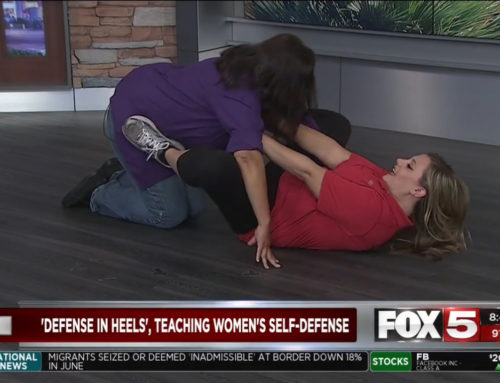
Defense in Heels offers hands-on self-defense classes designed specifically for children. Students learn awareness, confidence, boundary setting, escape techniques, and real-world safety skills in a supportive and empowering environment.
Because every child deserves the confidence to stay safe and the knowledge to know what to do when it matters most.